AI Appointment Setting for Coaches: How It Books Calls
What AI appointment setting for coaches is, how it turns leads and replies into booked calls, and what to check before you trust it with your pipeline.
The short answer
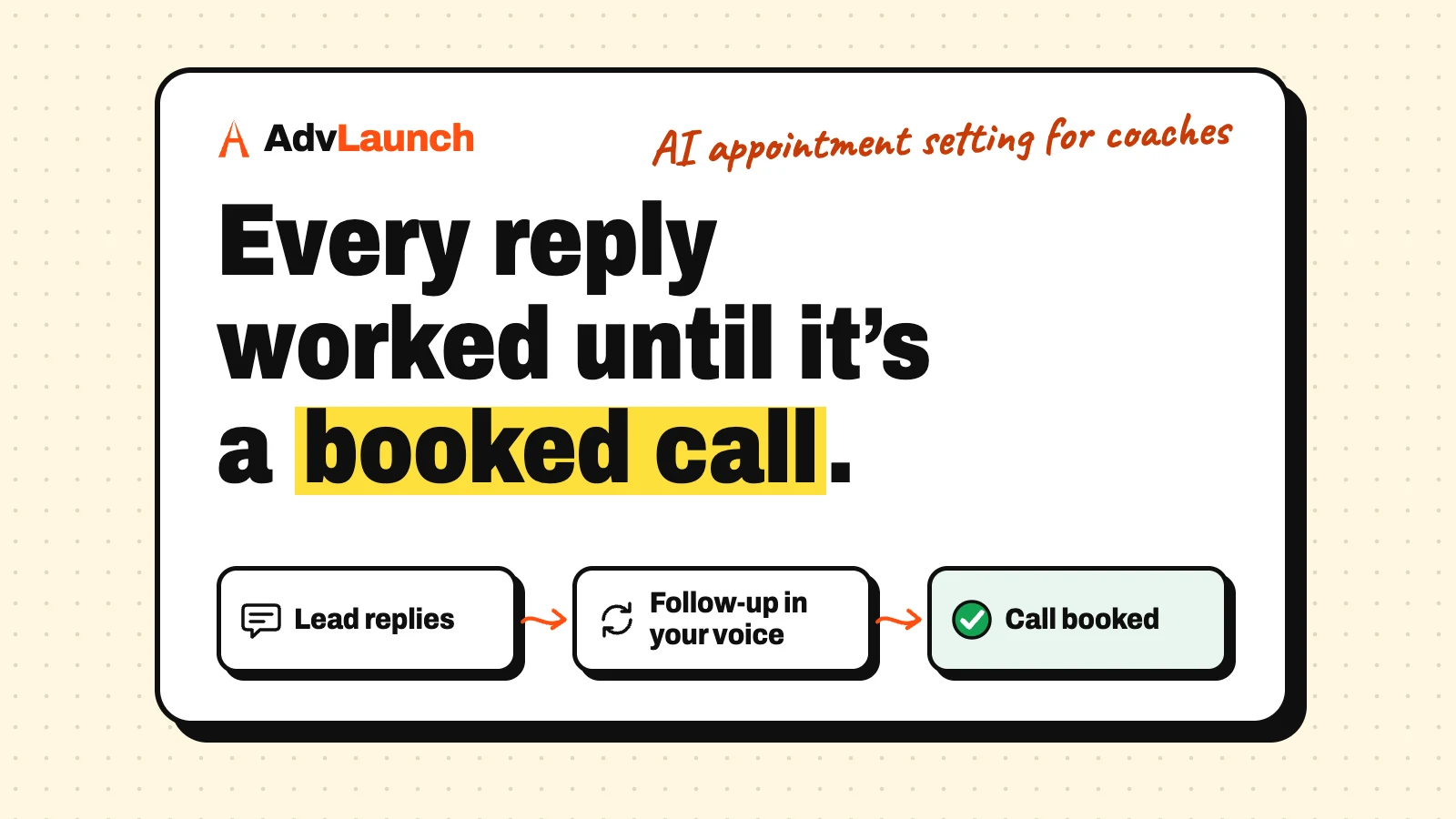
AI appointment setting is a system that works every lead and every reply until a qualified person has a time on your calendar. It follows up fast, keeps the conversation moving and books the call. You still take the call. It only works when your offer closes and there are real people to talk to.
Between a lead raising a hand and a call landing on your calendar there is a gap, and a lot of good conversations die in it. Someone replies to your email, fills in a form or answers a message. Then they wait while you finish a client session, travel or sleep. By the time you write back, their attention is somewhere else.
Appointment setting is the job of closing that gap. For years it has been a person's job. AI appointment setting hands the same job to a system, so replies go out in minutes and leads wait far less.
What AI appointment setting is
A good appointment setter takes someone from interested to booked. They reply quickly, work out whether the person is a fit, deal with the small questions that stall a booking and get a time on the calendar. If the person goes quiet, they follow up. If the person isn't ready, they note when to come back.
AI appointment setting does that work with agents trained on your voice and on who you want to speak to. They work every lead and every reply until the person has a call on your calendar or has clearly said no. Your first live conversation with them is the sales call, and the goal is simple: more booked calls with people who fit, and more of them turning into clients.
It is not a replacement for you. It doesn't take the call, sell your program or talk to the clients you already have.
Where the line sits
We run the system that runs your business. We don't run your client relationships. Those stay with you.
Why the first reply matters so much
A lead is most interested at the moment they act. The first reply sets the tone, and speed tells them you run a tight operation. Each hour of silence makes your next message work harder. After a day or two you are no longer replying to a warm lead. You are starting a cold conversation with someone who happens to know your name.
If you are the person who answers every lead, this is a capacity problem more than a skill problem. You write good replies. You just can't write them at 11 p.m. on a Saturday, between sessions or on a plane. A setter that never sleeps takes that limit away, and you stop being the usual reason a lead waited.
Who it suits
It suits coaches and consultants who are still the reason every deal closes. The program works, the pipeline is referrals and DMs, and there aren't enough hours to fix it. If that is you, the gap between interest and a booked call is probably your biggest leak, because you are the only one filling it.
It doesn't suit everyone. If your calls don't close yet, or you have nobody to talk to, a setter will only make those problems arrive faster. The readiness check further down helps you tell which side you are on.
Where the calls come from
A setter is only as good as what you point it at. There are three sources, and they are worth working in this order.
- Old leads and past conversations. People who inquired last year, came to a webinar, took a call and said not now. They already know you, and they are sitting in an inbox or a spreadsheet doing nothing. That is why we start here.
- New inbound leads. Form fills, messages and replies to your content. Speed matters most with these, because the person is thinking about you right now.
- Replies to outreach. When you email or message people who fit, some of them answer, and those replies need handling fast and well. We cover the sending side in cold email for coaches and consultants and LinkedIn outreach for consultants.
The setter works whichever channel a lead arrives on, in one place, so nothing falls between inboxes.
How it turns a reply into a booked call
Say a lead replies to one of your emails on a Thursday afternoon. In a well-built setup, this is what happens next.
- The reply is read within minutes, at any hour.
- The agent replies in your voice. It picks up what the person actually said and asks the one or two things that decide whether a call is worth having.
- If they fit, it offers times that suit their time zone and books one.
- You receive the booking with a short note: who they are, what they said and what they are after.
- If they go quiet, it follows up. If they say not now, it records when to come back, and does.
None of this is clever. It is what a good human setter does on a good day. The difference is consistency. The system is built to do it for every lead, at every hour, in the same way, and it doesn't forget to follow up on Friday.
Follow-up is where a setter earns its keep. A lead who goes quiet after a first reply hasn't said no. They got busy. A good setter comes back later with something new, and stops the moment the person asks it to.
| Decision factor | A human setter | AI appointment setting |
|---|---|---|
| First reply | Depends on their hours and workload | Within minutes, at any hour |
| Quiet leads | Follow-up slips when the day gets busy | Follow-up is scheduled for every quiet lead |
| Odd or tricky replies | Strong. People are good at nuance | Good on common cases, weaker on odd ones, so those go to you |
| Your voice | Learned over weeks and varies between people | Agents trained on your voice, then kept consistent |
| What breaks it | Turnover, sick days, a bad week | A weak offer, a poor list or a booking path that doesn't work |
| Who checks it | You, when there is time | You, on a sample of real conversations, early and often |
Neither one replaces the person who runs the sales call.
What it needs from you
Setup is mostly you explaining how you sell. A good install asks for a handful of things.
- Your offer in plain words, including who it is for and who it isn't.
- Who is worth a call, and what to do with people who aren't.
- How you talk to leads, usually shown with real messages you have written.
- When you can take calls and how long each one should be.
- What should always come to you instead of being handled, such as a question about a custom program or a message from someone you know.
Expect to spend real time on this at the start and a little each week after, because the system will meet cases nobody thought of. Every fix you make in those early conversations improves every conversation after it.
What to watch for
AI appointment setting goes wrong in predictable ways. Check these before you hand it your pipeline.
It doesn't sound like you
If the replies don't sound like you, people are booking with a stranger. Read a batch of real conversations early on. If you wouldn't have sent a message, change the instructions until you would.
Nobody defined who is qualified
A calendar full of the wrong people is worse than an empty one, because you spend real hours on calls that go nowhere. Decide who is worth a call before anything runs, and write it in plain words.
- Do they run the kind of business you can help?
- Do they have the problem you solve?
- Can they afford what you sell?
- Are they the person who decides?
Every extra question you ask before booking filters out more of the wrong people and costs you a few of the right ones. Ask only what changes the answer.
The handoff is thin
A booking with no context makes you start the call from zero. Every booking should arrive with what the person said, what they want and anything that might trip you up. The test is simple. Could you walk in cold and still sound prepared?
The odd cases go nowhere
Some replies need you: a question about a custom program, a complaint, someone you know personally. The system should recognize these and pass them to you quickly instead of guessing.
Your channels take the damage
A system that follows up still sends from your email domain and your accounts. Careless sending costs you the channel, and a damaged channel costs you leads. Mail needs a proper setup and a gentle start, and LinkedIn needs care. Ask how each one is protected before anything goes out. Our guides to cold email and LinkedIn outreach explain what good looks like.
You count messages, not meetings
Replies sent and conversations started are easy to count and easy to be proud of. They aren't the goal. Track calls booked, calls held and clients signed. If calls get booked and people don't turn up, the fix is on the show-up side, and we cover it in why booked sales calls don't show up.
Your calls close, your pipeline is thin
A good fit
You sell well when you get a conversation, and the problem is not enough of them. Start with your old leads and your inbound, then add outreach.
You have leads, but calls rarely close
Fix the offer first
More booked calls won't fix a call that doesn't convert. Sort out the offer, the pitch or who you are talking to, then add volume.
No list, no inbound, no outreach yet
Build the source first
A setter needs people to work. Start with the channels that create conversations, then add setting once replies are coming in.
Running it yourself or having it run for you
You can build this yourself. The parts are all available: a way to reply to leads, a calendar, agents trained on your voice and somewhere to keep notes.
The setup isn't what takes the time. The tuning is. Reading conversations, fixing the odd cases, keeping the channels healthy and repairing what breaks all take hours. It is easy to get it working once and then run out of time to keep it working.
That is the part we take on. We install the AI workforce, connect your channels and calendar to it and train the agents on your voice and how you sell. We work your old leads first, because those people already know you. We work toward agents live by day 7 and 50+ qualified meetings on your calendar in your first 90 days, meetings you didn't book, didn't prep and won't chase. We report the numbers as we go, so you can see how it is working.
On our Managed plan we also run the system for you and report the numbers. On Growth we build it with you and you run it. Either way, you take the calls. How it works shows the full install.
The AI appointment setting service covers what we do on this channel. If you want to see how it has gone for coaches we have worked with, the case studies are the place to start.
Book a 45-minute call with Ali, our senior consultant, and see how this would work for your business. We share the price on the call, once we know it’s a fit.
Book a call